
Author Archives

-
Retirement Recap Video: Dan & Beth Sonnenberg 10 Years Training Pastors & Leaders in Latin America with Timothy Two Project International

See photos of over 600 pastors and ministry leaders from 43 workshop groups in 14 countries throughout Mexico, Central America, South America and the Caribbean as well as 18 National Missionary Partners
-
What Misconceptions Mental Health Hurt People in the Church?

In both church and community, mental health is often seen as a spiritual failure, a personal weakness, or something shameful and dangerous, rather than as a real health issue that can affect anyone and often needs both spiritual and professional care.
-
What is the Intermediate State After Death According to the Westminster Confession and Catechisms
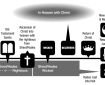
The Westminster standards teach that after death, believers’ souls go immediately to be with Christ in the highest heavens, where they are made perfect in holiness, while their bodies rest in the grave until the resurrection. For the wicked, the standards teach that their souls are cast into hell at death, while their bodies remain in the grave until the final judgment.
-
How Christ Became Human: The Two Miracles

“The mediator, who was to reconcile God and humanity, had to be himself both God and human and in one person to make the works appropriate to each nature acceptable to God on our behalf and counted on by us as the works of the whole person.” (Westminster Larger Catechism Q.40)
-
Beth Sonnenberg’s Children’s Ministry Leaders Workshop in Brazil

Beth Sonnenberg recently taught a Timothy Two Project International workshop for a group of twenty Children’s Ministry Leaders from fourteen local local churches in Fortaleza, Brazil located in the northeastern coastal State of Ceará.
-
Beth Sonnenberg’s Children’s Ministry Leaders Workshop in Mexico

Beth Sonnenberg recently taught a Timothy Two Project International workshop for a group of 20 Children’s Ministry Leaders from 18 local churches in Verde Rico, Mexico located in a mountainous region of the southwestern State of Guerrero.
-
Old Testament Exegesis: An Analysis of 2 Chronicles 15:1-19

As Christians, we have received a measure of God’s blessing in our deliverance from sin and death by Christ on the cross. For some Christians, that is as far as they want to go. However, that is not God’s will for our lives. 2 Chronicles 15.1-19 urges us to continue to press forward in a life of obedience.

